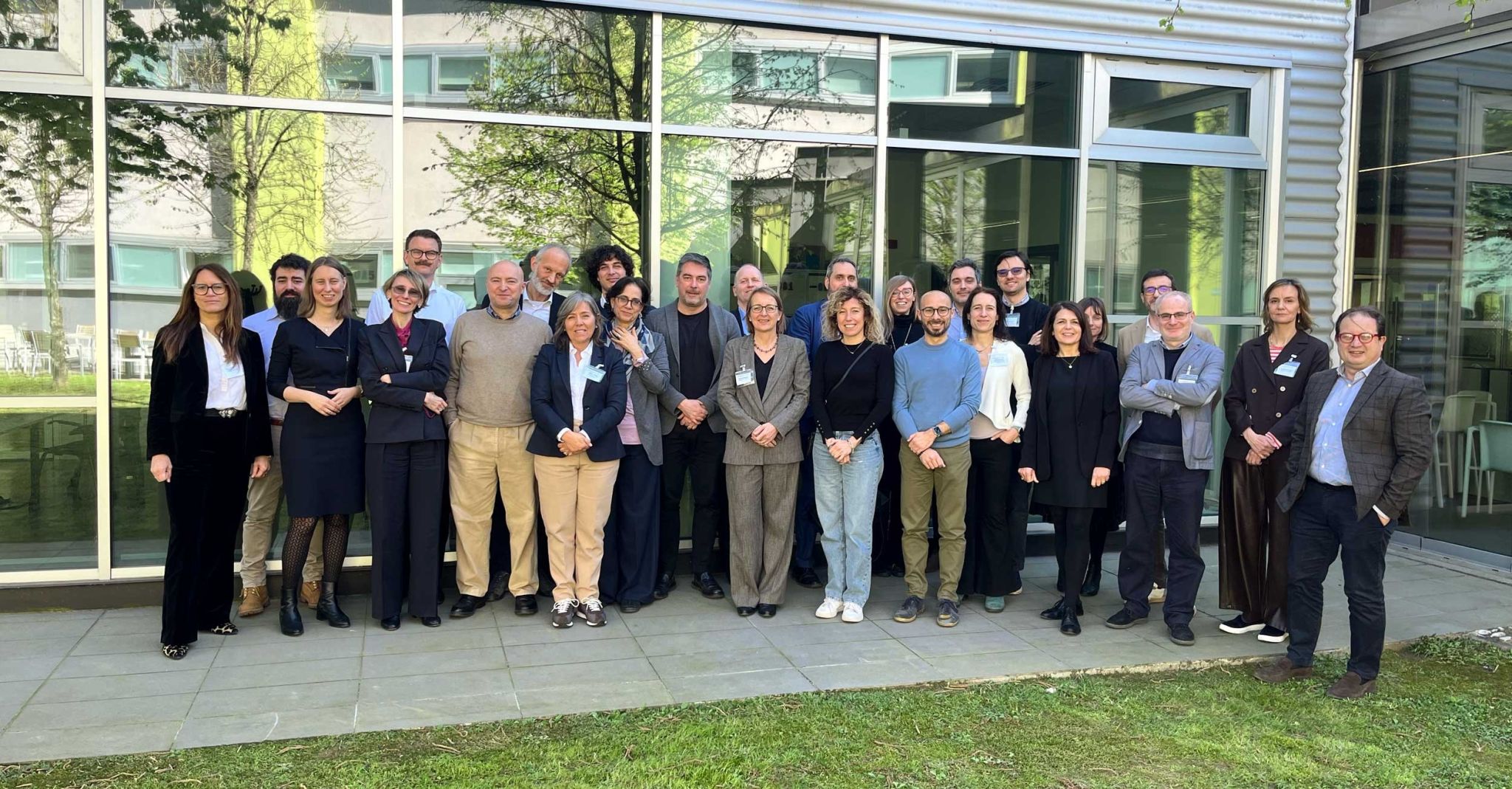


On 27 March 2026, the Department of Management, Economics and Industrial Engineering of the Politecnico di Milano hosted the third meeting of the HumanTech Scientific Committee, bringing together internationally renowned academics and representatives from leading companies.
The meeting opened with a strategic overview presented by Prof. Raffaella Cagliano, followed by a presentation by Prof. Federico Caniato on the ongoing results of the HumanTech Programme.
Among the Scientific Committee members in attendance was also Isabel Lopes Nunes, a researcher at UNIDEMI, whose participation strengthens the presence and contribution of Portuguese research in this international context. Her inclusion in this committee reflects recognition of her academic and scientific career, as well as the active role she has been playing in interdisciplinary research initiatives in the field of People–technology interaction.
One of the highlights of the day was the visit to the three laboratories created within the scope of the project: the Marco Garetti Lab, the Behavioural Research in Immersive Environment Laboratory (BRIEL), and the HumanTech Data Hub. This visit gave Scientific Committee members the opportunity to gain first-hand insight into the infrastructure supporting research activities.
HumanTech – People and Technology – is a research programme selected and funded by the Italian Ministry of University and Research (MUR) for the 2023–2027 period, under the national initiative “Dipartimenti di Eccellenza”. The programme aims to strengthen interdisciplinary research on the interaction between humans and technology, promoting collaboration between academia and industry.