

The NOVA University of Lisbon has presented NOVA Aerospace, a pioneering project in Portugal aimed at creating a strategic hub for Aerospace Engineering, bringing together education, research, industry, and infrastructure at the Cascais Aerodrome in Tires through the innovative concept of a University Airport.
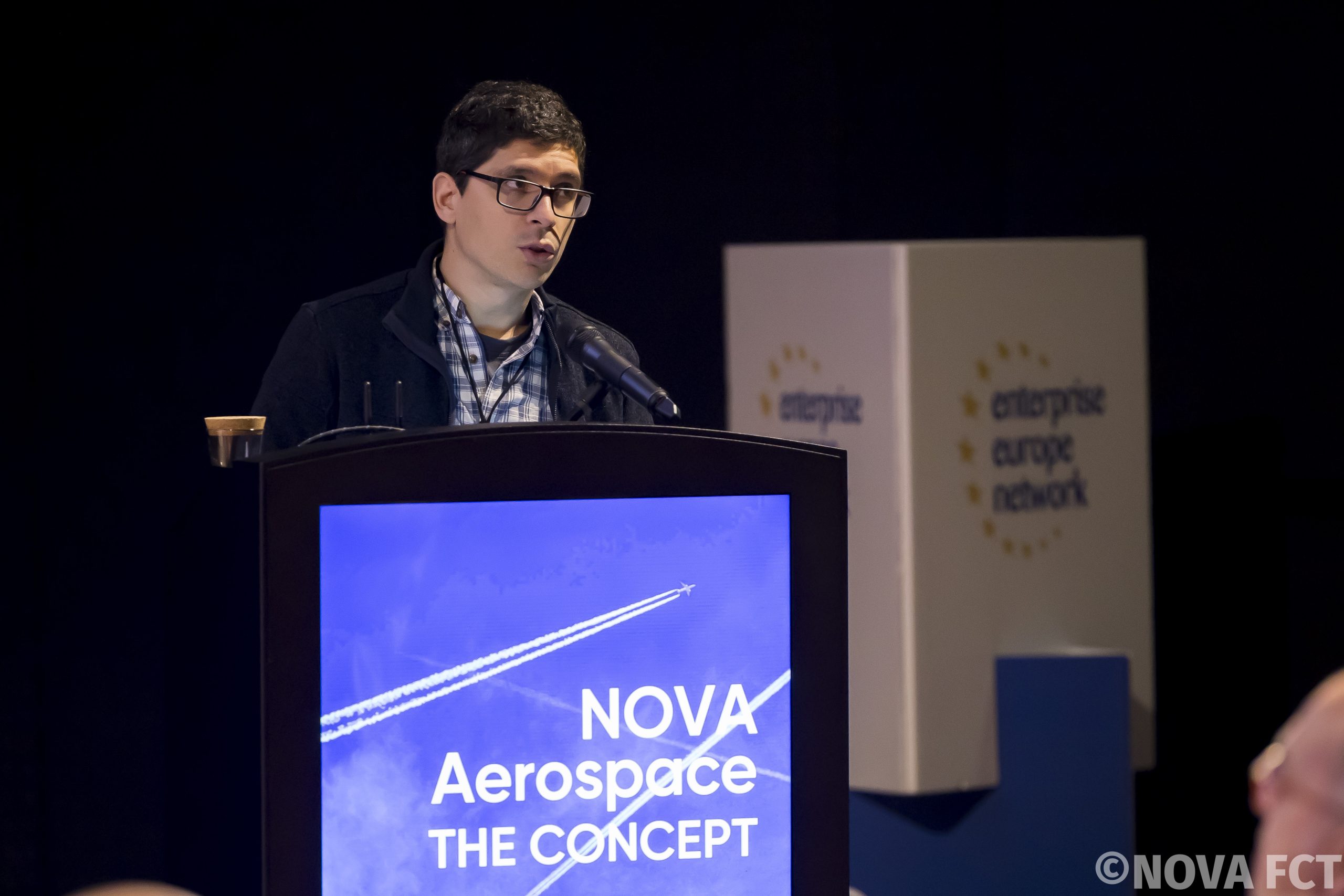
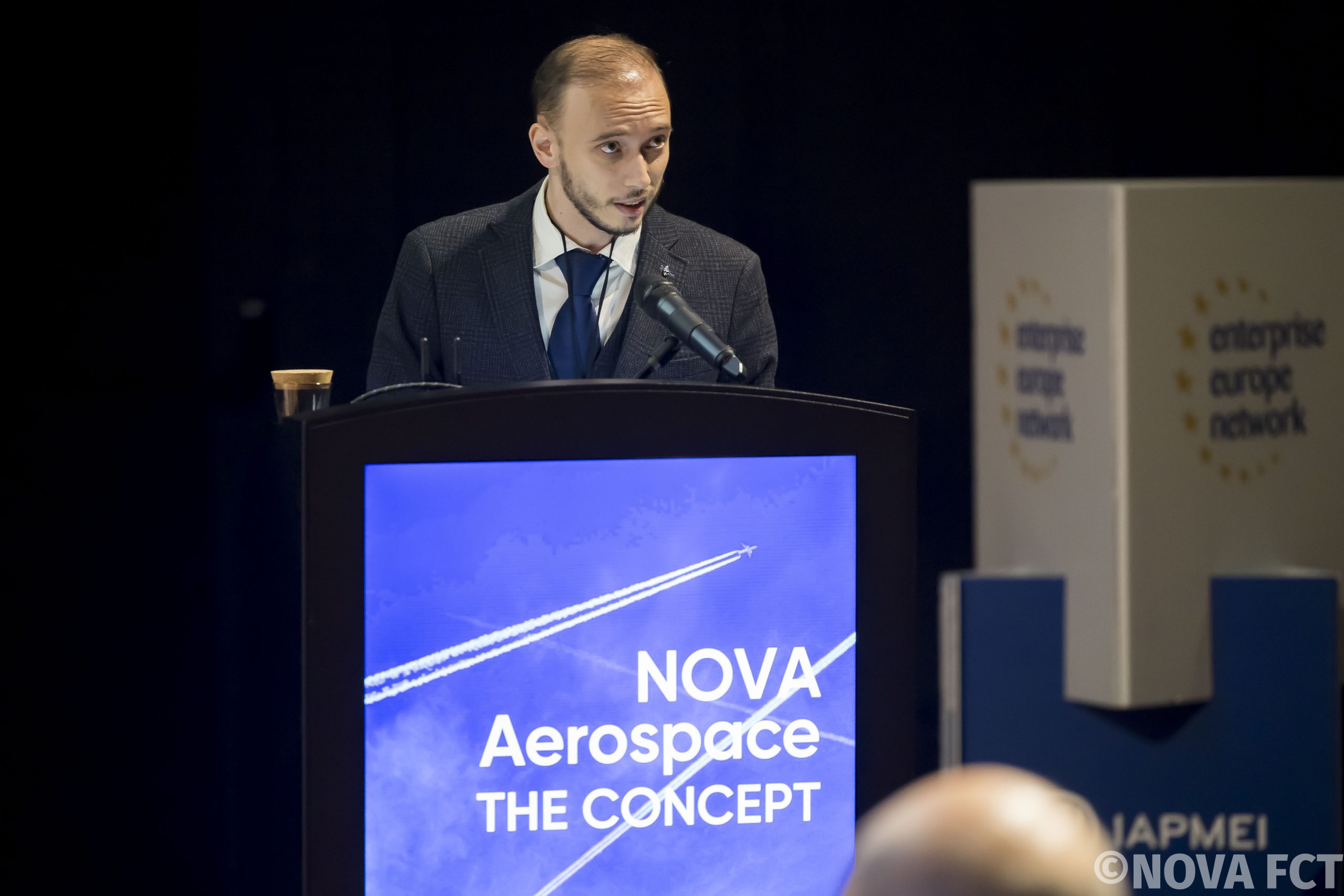
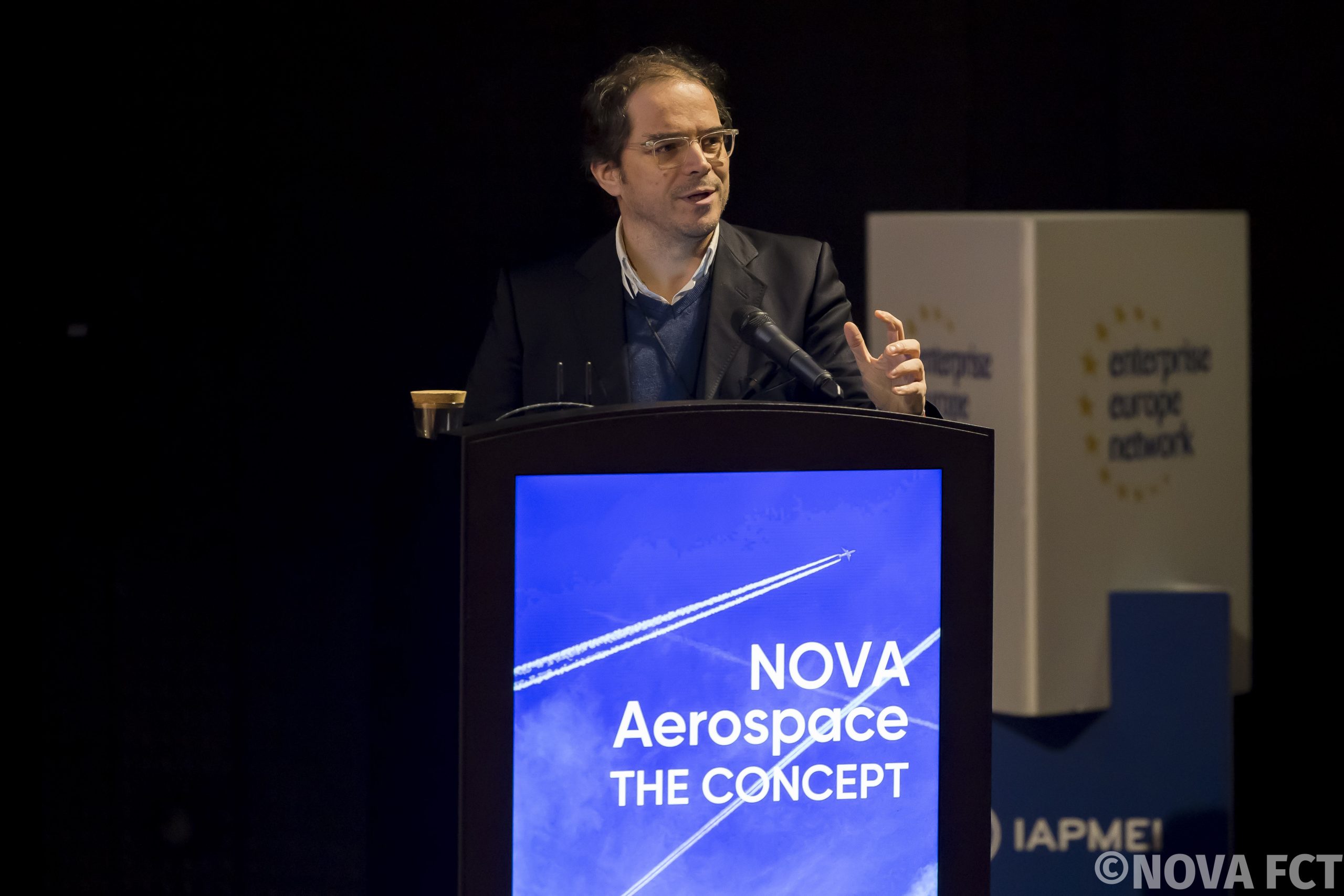
During the event, partnerships were also formalized with companies in the aeronautical and aerospace sectors, reinforcing the connection between academia and industry. The session also featured three oral presentations delivered by Miguel Machado, Radu Godina, and Hugo Biscaia—members of DEMI and researchers at UNIDEMI—who presented ongoing research and technological development (R&D) work in the field of Aerospace Engineering.
Among the presentations, the topic “Non-destructive Inspection of Fiber Reinforced Polymers” stood out, focusing on research carried out at NOVA FCT/UNIDEMI in the area of non-destructive testing for the inspection of composite materials. The work highlighted the integrated use of multiple techniques—such as eddy currents, ultrasound, thermography, digital radiography, and terahertz—combining probe development, numerical simulation, experimental validation, and the automation of customized inspection systems.
The study “Life Cycle Comparison of Different Manufacturing Technologies for Spacecraft Fuel Tanks” was also presented, offering a comparative analysis of different production processes applied to propulsion tanks for space applications. The results demonstrate the impact of these technologies on energy efficiency and sustainability, underscoring the contribution of national research to innovation in the aerospace sector.
Another presentation within the scope of NOVA Aerospace, titled “Metal-to-Composite Joining for Outer Space Applications”, addressed the critical role of metal-to-composite joints in the aerospace context. It highlighted how FRP composites, and particularly CFRP materials, have revolutionized aerospace engineering by enabling lighter and stronger structures widely used in aircraft such as the Airbus A380 and Boeing 787.
The presentation focused on the challenges associated with the integrity of adhesive joints between composites and aluminum at cryogenic temperatures, questioning the impact of extreme cold on the mechanical performance of adhesives.
Through a combined approach of numerical modeling (FEM), analytical solutions, and experimental testing, the authors developed models capable of predicting the behavior of these joints, with preliminary indications suggesting that joint strength may not be significantly affected under cryogenic conditions, thereby contributing to the advancement of more efficient structural solutions for space applications.
With NOVA Aerospace, NOVA strengthens its position as a leading institution in connecting academia, industry, and public policy, contributing to establishing Cascais as a national and international hub in the emerging aviation and space economy. This is a strategic project with significant transformative potential for the region’s scientific and industrial ecosystem.